
Free check · 8 pages · PDF + scorecard
Find the first report to automate
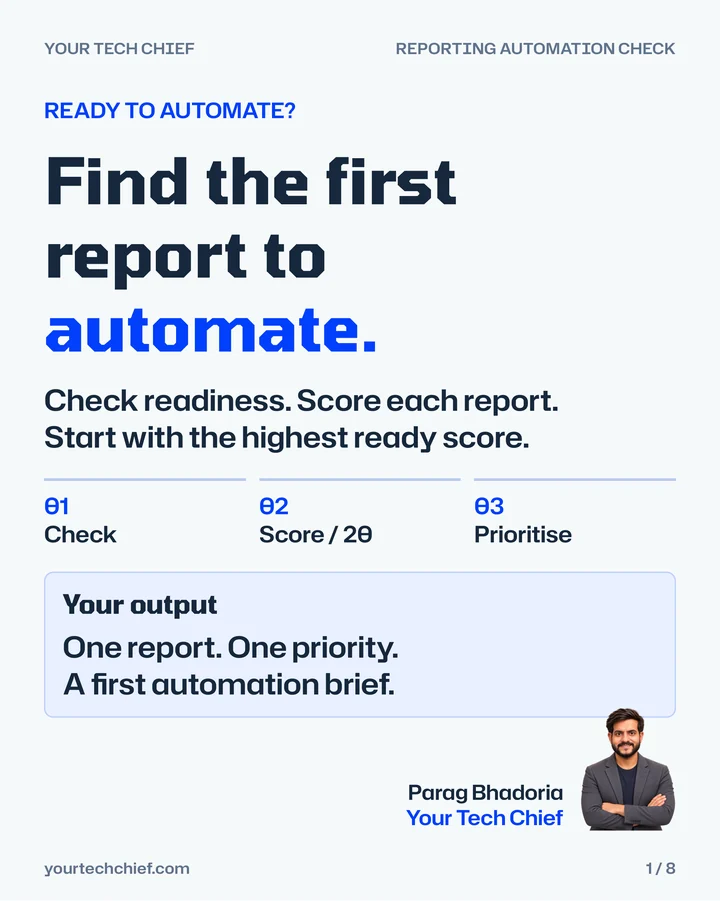
Check which of your recurring reports are ready to automate, score each one out of 20, and start with the highest ready score. You leave with one report, one priority and a first automation brief.
Get the check by email
Enter your email and the PDF, with a copyable scorecard, arrives in your inbox in a minute or two.
Sent
Check your inbox.
The check is on its way to from Parag at Your Tech Chief. If it hasn't arrived in a few minutes, check your spam or promotions folder.
Want a second opinion on your scores? Book a free 30-minute review.
What's inside
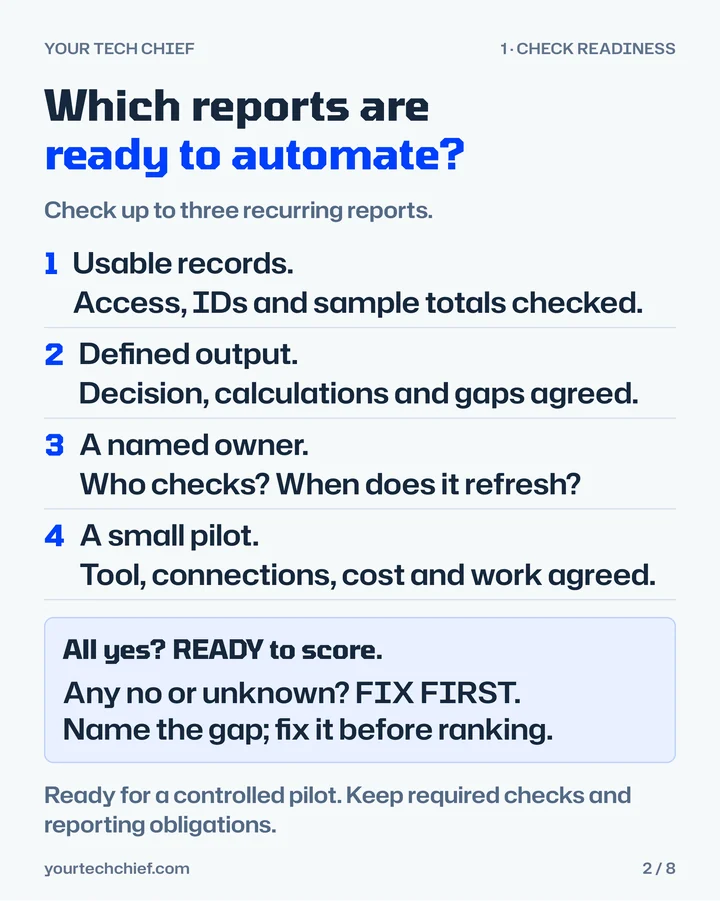
- Check readiness first. For up to three recurring reports: usable records, a defined output, a named owner and a small pilot. Any "no" or "unknown" means fix that gap before you rank anything.
- Score the time you can free. Removable hours a month, measured from preparation minutes per cycle across everyone involved. Copying, collecting and rebuilding count; checks you need to keep don't.
- Score the decision, the rules and the ease. How urgent a decision the report supports, how repeatable its rules are, and how small the first pilot can be. Each from 0 to 5, for a total out of 20.
- Rank ready reports only. The highest ready score goes first, with clear tie-breaks. A worked example shows why a 17-point report can still wait behind a 16-point one: its IDs don't match yet.
- Turn priority one into a pilot. Define the change, agree what counts as correct before you start, and run one normal cycle in parallel before retiring the old work. Comes with a copyable scorecard for each report.
A look inside






Who it's for
Founders and teams who prepare the same reports every week or month, such as sales, collections, dispatch or the month-end pack, by copying figures from one tool into another. You don't need a dashboard tool to use it, and you don't need to buy one afterwards.
The work is usually recorded once and reported twice. Automating the right report first removes that repeated preparation while keeping the checks that make the numbers trustworthy. For why the gaps between tools land on the founder, see Your business has the tools. Why are you still holding it all together?